
In modern golf, access to high-level coaching has never been easier. From traditional lessons at local clubs to a growing array of digital platforms, today’s golfers are no longer limited by geography when it comes to sharpening their game.
Yet, with increased access comes a new challenge; with so many options available, it’s easy for golfers to feel overwhelmed. If you’re someone who consumes advice from multiple sources without ever gaining real clarity of what your game needs to improve, then you can understand this globally experienced annoyance. For many amateurs, the frustration isn’t a lack of effort - it's knowing what to trust.
The traditional route of visiting a local PGA Professional remains not only relevant, but the preferred choice for many golfers. However, the rise of online coaching has started to change how improvement happens between lessons. Far from being a replacement, it has emerged as a powerful extension of the coaching process - helping golfers progress more consistently and with greater understanding too.
Online coaching offers benefits that simply weren’t available before. Lessons can be revisited in a golfer’s own time, removing the pressure to absorb every piece of key information from a single session. Feedback is no longer dictated by weather, daylight or diary constraints. Most importantly, improvement begins to happen on the golfer’s schedule - not just within the narrow windows that traditional, in-person lessons often allow.
The Shift
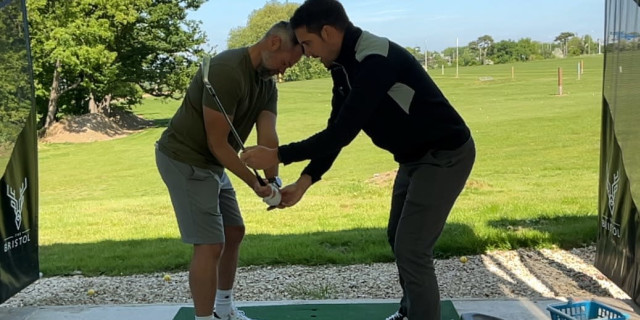
It’s hard to ignore the role the COVID-19 pandemic played in accelerating the growth of online golf coaching. During a period when in-person lessons were suddenly impossible, many coaches were forced to rethink how they worked - or, in some cases, how they worked at all. "Skillest came into the market big time during Covid and that’s when I first jumped onto it," Andy Carter, a world-renowned and expert online golf coach, explains. "I was sitting at home and not able to work, so it made complete sense." The shift brought immediate change. Coaching was no longer confined by geography and the traditional regional catchment disappeared almost overnight. "I’ve got students in Argentina, Mexico, Australia, Asia and London," Carter adds. "This catchment is as big as it needs to be."
However, the benefits of online coaching weren’t limited to coaches alone. For golfers, the shift opened up a new way of learning - one that better reflected how improvement actually happens away from the practice tee. With limited access to facilities during lockdowns, many golfers were receiving feedback before practicing ideas in their own time, often using makeshift setups at home. One of the most immediate advantages was the ability to revisit feedback when it mattered most. Rather than relying on memory from a single in-person session, golfers would return to their coach’s guidance as often as needed. "What I always argue is, if you go for an in-person lesson there’s no chance you’ll remember all of it," Carter revealed. "You remember two or three minutes, and the rest you try to recall later - and that’s when the message starts to change in your own head."
More than five years on from that period of disruption, online coaching platforms have continued to evolve - shifting the focus from simple feedback to ongoing support between practice sessions. For golfers, this has meant greater structure and clarity around what to work on once the lesson ends. "Skillest has an AI feature called Shadow Pro," Carter shared. "It takes the lesson and helps turn it into a practice plan for your next range session. You can say, ‘Give me a plan based on Andy’s lesson today,’ and it will outline what to work on and how to approach it." Crucially, this reinforces one of the biggest advantages of online coaching: clarity between sessions. Rather than leaving a lesson unsure of priorities, golfers can revisit guidance, structure their practice and better understand the feelings and intentions behind each task.
The Golfer’s Reality
Serious golfers understand that meaningful improvement rarely comes quickly. Golf is built on repetition, patience and time invested - which is why anyone promising instant fixes should be treated with caution. Whether coaching happens in-person or online, progress still relies on commitment from both coach and golfer. "Success really depends on the expectations you go in with," Carter revealed. "If you’ve got a coach who can explain why something works and what to expect from the process, you’re already in a better position. We’re not going to do one lesson and suddenly stop slicing the golf ball - anyone who tells you that is lying. There’s always a process to follow, whether it’s in-person or online, and as long as you’re practicing with intent, progress will come."
There is, however, a key difference between online and in-person coaching: accountability. "The beauty of online coaching is that I can keep people accountable," Carter relayed before continuing. "I can check in and say, ‘Have you sent any videos recently? You’ve gone a bit quiet.’ With in-person lessons it’s quite easy to cancel one session and suddenly go three months without doing anything. Online coaching keeps golfers accountable to their goals and I think most people actually need that."
Flexibility is arguably the greatest advantage of online coaching - allowing golfers to fit improvement around real life, rather than the other way around. "If you book an in-person lesson, you’ve got to get in the car, drive to the club, warm up, have the lesson, stay to practice and then drive home," explains Carter. "That’s easily two or three hours out of your day." Online coaching removes much of that time pressure. "People are juggling work, family and their golf," Carter adds. "Now they can send swing videos in, I’ll get back to them within 24 hours, and they can revisit the feedback in their own time. Instead of one intense session, it becomes a slower burn over a few days - which for most golfers is far more realistic."
Credibility & Trust

Trust plays a decisive role when golfers choose who to develop their game with. While all qualified coaches share a baseline level of technical knowledge, it is often how that knowledge is communicated - and how consistently - that separates one coach from another. For Carter, communication is central to building that trust. "If I haven’t heard from someone, I’ll drop them a message," he explains. "As soon as someone sends me a lesson or a question, I try to reply as quickly as possible - even if it’s just to acknowledge it and give them some clarity on what they’ve asked."
It has never been easier to find answers to common golfing problems. A quick search will produce countless solutions for slices, short-game nerves, or ball-striking issues - but most of that information is built around general symptoms rather than individual causes. This is where structured online coaching separates itself from the noise. "A lesson should always be tailored to the individual," Carter said. "If you’re slicing the ball and you go online, you’ll see advice on grip, weight distribution, aim or transition - but where do you even start? My job is to prioritise. I might say, ‘Your slice is happening because of your grip or your transition.’ And often, those things are linked. The grip looks wrong because the transition is wrong. The wrong grip can lead to a poor backswing and therefore transition. It’s about finding the right thing to work on first, not everything."
A common misconception among amateur golfers is the belief that one lesson should fix everything. Newer golfers are especially prone to this way of thinking, often assuming that once a fault is addressed, it’s gone for good. "Amateurs change something and think they’re done with it. A lot of it is mentality. On the range, you might slice one and not think much of it. But on the course, that same shot brings frustration. It happens again and suddenly you’re trying to do something different. After 20 minutes - in what might be a four-hour round - you’re already manipulating the club."
Conclusion
The rapid growth of online coaching has reshaped how golfers pursue improvement, particularly for those balancing the game with increasingly busy schedules. While traditional, in-person lessons remain a valuable and proven route for many amateurs, online instruction has introduced a level of flexibility that simply didn’t exist before - allowing progress to happen beyond the boundaries of time, location and availability.
The reality of improvement hasn’t changed. Golfers still need to commit time, effort, and patience to their game. What has changed is the pressure to absorb everything in a single sitting. With online coaching, guidance no longer disappears the moment a lesson ends - golfers can revisit feedback when it matters most, reinforcing understanding rather than relying on memory alone.
Andy Carter has become one of the most recognisable voices in modern golf coaching, particularly within the UK, by embracing education, clarity and long-term development rather than chasing quick fixes. That approach has earned the trust of thousands of golfers worldwide, many of whom now work with him through online coaching.
Golfers interested in gaining a deeper understanding of their own game - and accessing structured, ongoing guidance beyond traditional lessons - can explore Carter’s coaching via his Instagram, YouTube channel, and official website - his online coaching programmes are available through his Skillest account - https://skillest.com/@AndyCarter.
 Instagram