
How to stop hooking the golf ball
By: Derek Clements | Edited: Thu 26 Mar 2026
Share this article:


It is widely accepted that the most destructive shot in the game of golf is the slice. It is also probably the most common poor shot in the game at club level.
Almost every high handicapper I play with has a built-in slice. And it always amazes me just how few of them ever actually play for something they surely know is inevitable.
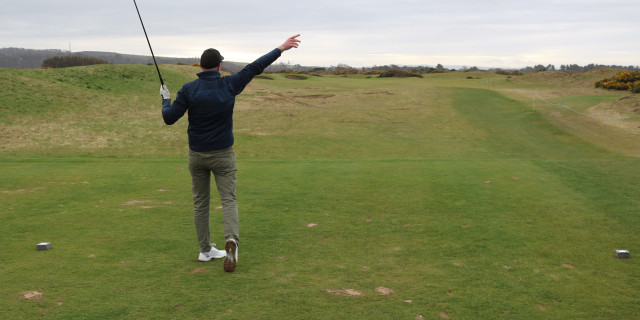
My issue has always been the opposite - a hook. Sometimes even a duck hook.
Do you regularly hook the golf ball?
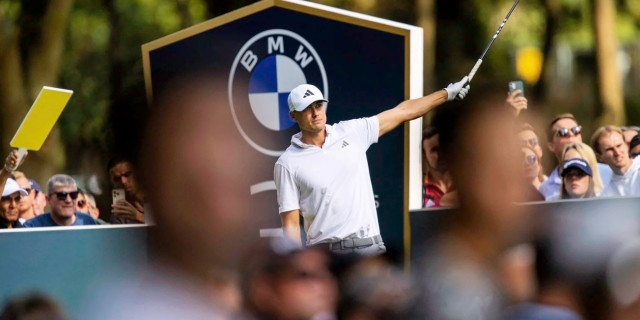
(Image Credit: Kevin Diss Photography)
In my younger days I used to play with a closed stance because it allowed me to generate a larger shoulder and hip turn in my backswing and meant that I could hit the ball further. For my height and build, I was able to send it out there a decent distance.
My ideal shot shape was a draw. But of course it would go wrong sometimes and the result would be a dreadful hook.
The problem with a hook is that when the ball lands it also rolls far further than a slice ever will so you end up even deeper in the mire.
As age caught up with me I squared up my stance because my back could no longer take the strain I was putting on it. I now play the game with my hips, feet and shoulders aligned directly at the target and yet I am still able to draw the ball most of the time.
The prime reason for this is that I have always had a strong grip - and that is not something I am going to be changing now.
If you spend any time at all on social media platforms you cannot fail to have noticed that just about every teaching pro on there is obsessed with helping you to eliminate your slice. I cannot remember the last time I came across a pro telling you how to get rid of a hook.
Ben Hogan even described it as an abomination - and he knew a thing or two about swinging the club properly. He was one of the first leading golfers to actively promote the use of a fade because he believed it was easier to control the ball with a left to right ball flight.
How to stop hooking the golf ball
Fear not, because Advanced PGA Professional Aaron Holtom, of Morley Hayes, East Midlands Golf Academy, has some advice that may help you.
He says: "First, identify why your ball is curving left. One common and overlooked cause is a toe strike with the driver. Due to the curved face’s "gear effect," contact near the toe makes the ball spin right-to-left. Use impact tape or foot spray on the clubface to see where you’re striking. Often, simply focusing on centered contact can reduce hooks.
"If you’re hitting the centre but still hooking, the issue is likely an overly closed clubface. The ball’s starting direction is dictated by where the face points at impact - so if it’s pointing left, the ball will start left.
"What closes the face?
"1. A grip that’s too strong (seeing three or more knuckles on your left hand).
"2. A takeaway that points the clubhead behind you early. A good checkpoint: when the club is parallel to the ground in your backswing, the toe should point roughly toward the sky.
"A great way to correct a hook is through experimentation. Go to the range and try to slice the ball on purpose. This playful exploration builds feel and directly improves your understanding of face and path."
Don't forget that you can book a golf lesson with Aaron today.
Instead of a hook, perhaps it's a slice that you struggle with. And we have some advice for you to solve that too!
About the author

Derek Clements is a seasoned sports journalist and regular Golfshake contributor, specialising in tour coverage, opinion pieces, and feature writing. With a long career in national newspapers and golf media, he has reported on the game across Europe, the United States and Australia. A passionate golfer, he has played and reviewed numerous renowned courses, with personal favourites including Pebble Beach, Kingsbarns, Aldeburgh, Old Thorns and the K Club. His love of the game informs his thoughtful commentary on both professional golf and the wider golfing community.