
Proof that golf is good for you as you get older
By: Derek Clements | Edited: Sun 31 May 2026
Share this article:


Senior golfers may be doing more than staying active. New research suggests golf could help support brain health and healthy ageing.
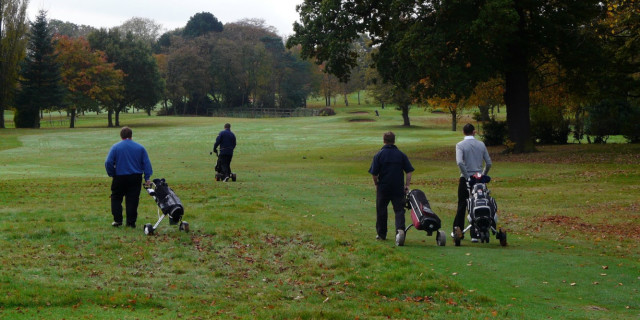
I PLAY almost all of my golf in the company of senior golfers, mostly men and women over the age of 60.
Of course we all moan about our various aches and pains. Most of the people I play alongside have had knee or hip replacements or are on the waiting list to have operations done.
There is back pain and arthritis. I had to give up the game for almost five years because of shoulder pain. Having been told that I required surgery to put it right, I retired from full-time work and within a month the pain had vanished.
But the one thing that strikes me above all else is that, with one of two notable exceptions, senior golfers are a pretty cheery lot. Their work days are behind them and most of them have enough money to live comfortably enough.
And despite all our ailments, we are actually quit a fit bunch. We get out there and play two or three times a week, walking around five miles while swinging a golf club. It has to be good for us all.
So that is why it came as no surprise to me to learn that new research shows that playing golf – and not just walking – is so good for the mind that it can even protect against dementia.
Stephen Smith, the chief neuroscientist at SPL/PSYenz, told the Golf Business that the research shows that swinging a golf club brings additional neurological benefits to elderly people when compared with simply going out for a walk. Let me say here and now that I resent being called “elderly”. When I look in the mirror I do not see an old person. But my birth certificate indicates otherwise!
Smith said research from Pennsylvania State University shows that physical movement of the abdominal muscles creates a hydraulic-like vascular connection with the nervous system, driving the flow of waste-clearing cerebrospinal fluid within the brain.
One of the members at my golf club has recently been diagnosed with Parkinson’s Disease in his 70s. He was advised that continuing to play golf on a regular basis would help him to keep the symptoms at bay - and he is doing exactly that.
Smith said: “Until now the deep cleaning systems of the brain and the rest of our bodies have been seen by science as two, physically separate entities. The cerebrospinal fluid is extremely important for brain health but very difficult to access – as anyone who has ever had a lumbar puncture will testify. It acts as a cleaning mechanism by flowing all around our brain and spinal cord, picking up waste elements and removing them – if the flow of that fluid slows or stops, that health inducing cleaning service is cancelled.
“Now we know that even moderate exercise activates a pump-like system from our gut that makes sure that this health-enabling fluid keeps on moving effectively around our brain.
“This may explain other research that has suggested that older golfers have positive changes in metabolites in the kynurenine pathway which is linked to neurotoxicity / neuroprotection and the removal of waste products of this system.
“Research has shown that simply walking 3,000 to 5,000 steps a day can lower the risk of neurodegenerative disease in older people.
“Combine those steps with the abdominal muscle movements required to swing a club and all the health benefits that simply being out in the fresh air can bring, then golf may be the perfect prescription.”
At a conservative estimate, I walk around 50,000 steps on the golf course every week - and I will continue to do so for as long as I am able to.
About the author

Derek Clements is a seasoned sports journalist and regular Golfshake contributor, specialising in tour coverage, opinion pieces, and feature writing. With a long career in national newspapers and golf media, he has reported on the game across Europe, the United States and Australia. A passionate golfer, he has played and reviewed numerous renowned courses, with personal favourites including Pebble Beach, Kingsbarns, Aldeburgh, Old Thorns and the K Club. His love of the game informs his thoughtful commentary on both professional golf and the wider golfing community.