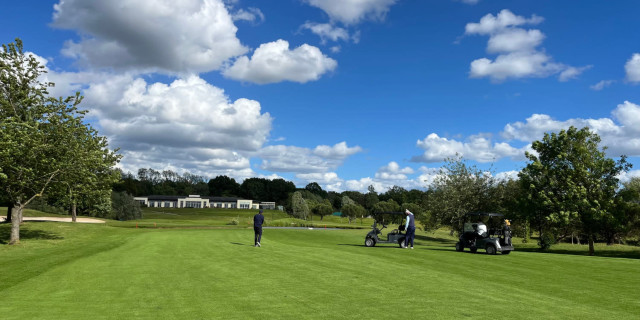
I don’t know about you, but when I come to a par three, I want to be faced with something that is short but beautiful, that calls for a well-placed iron shot.
I have no objections to facing a green that is surrounded by bunkers or that features a water hazard - as long as the challenge in front of me is fair. I believe that most par threes are the holes that should be offering us the best birdie opportunities.
So, when do courses and designers cross the line? Sadly, all too often these days.
You don’t need me to tell you that we now play a game that is obsessed with power and distance. It is all about hitting the ball as far as you can. That is all well and good when you are playing a par four or par five.
When Does a Par 3 Become a Par 4?
I grew up in an era when a hole that was 251 yards long was a par four. Full stop. No argument.
That particular rule book now appears to have been ripped up and thrown away. Some courses have par fours that measure 240 yards while others have par threes of exactly the same length.
There was a 240-yard par three at Aronimink during the recent US PGA Championship with a green surrounded by thick, rough and protected at the front by water. Even Keith Mitchell, one of the longest hitters on the PGA Tour, needed a fairway wood to reach.
The seventh hole at Los Angeles Country Club is a 284-yard par three. And if that were not bad enough, you get to the 11th and find yourself confronted by a par three of 297 yards!
The third hole at Merion is a 256-yard par three and is all carry to a huge elevated green which slopes steeply from back to front and is protected by a massive bunker. At the 2013 US Open, Tiger Woods described it as "a drivable par four."
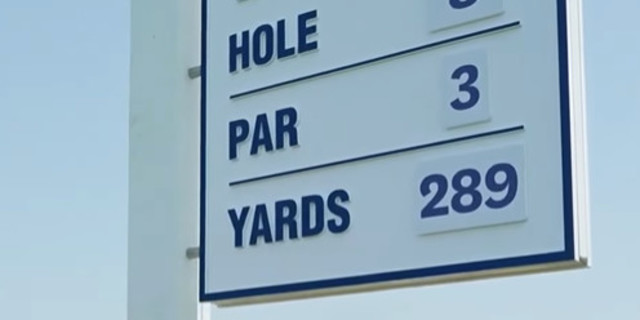
The eighth hole at Oakmont, scene of the 2025 US Open, measures 289 yards. It is a par three. In the final round of the 1973 US Open, this was the only hole Johnny Miller bogeyed en route to his course record 63.
Here’s what Viktor Hovland, one of the best golfers on the planet, has to say: "It just becomes hard. I just don’t think when you have to make a hole that long, it just doesn’t become that great.
"It just becomes like, okay, you got a certain target here and then you got to hit a shot around there and make a par and get out of there instead of a shorter par three that entices you to get close to it, but if you’re a little bit off, you’re either in the water or in a short-sided spot or if you bail out, yeah, you still have a tricky little putt.
"I just think all the best par-3s are under 200. You can maybe have it just over 200, but as soon as you start to take head covers off on par 3s, I just think it gets a little silly."
We have a par three at my home club, Dunston Hall that many members (myself included) believe is almost unplayable from the white tee.
From the yellows it measures around 160 yards, with trees on both sides. It calls for pinpoint accuracy. From the back tee it measures more than 200 yards and calls for a fairway wood or even a driver - and there is absolutely no margin for error. Many people pull out a seven iron and play it as a par four. And that just can’t be right, can it?
Par 3s Don't Have to Be Long
My view is that par threes do not have to be long to be difficult.
The eighth hole at Royal Troon, known as The Postage Stamp, measures just 123 yards. It should be a breeze. It isn’t and that is because the small green is surrounded by treacherous bunkers. And then there is the 12th at Augusta National. It measures 155 yards, but you will recall Jordan Spieth taking seven shots to play the hole and handing The Masters to Danny Willett. Every year we see countless players in Rae’s Creek.
When golf societies head for resort courses they almost always use the shortest par three as their nearest-the-pin hole. There is a good reason for that - they want everybody to have a proper and genuine chance of hitting the green.
And here’s the other thing - if you are hitting a driver or a fairway wood to a par three, how on earth are you going to stop the ball. If there is water or a cavernous bunker guarding the putting surface, then you know that you are going to have use enough club to clear the hazard - and then watch your ball hit the green and disappear into the rubbish at the back.
Let’s put the professionals to one side - they all play a game with which most of us are not familiar. But for club golfers I passionately believe that the maximum length of a par three should be 190 yards.