Golf courses in the UK face a myriad of threats and challenges. Whether it be financial pressures, rising operational costs, a decline in membership numbers, or even the impact of a more extreme and unpredictable climate, there is a considerable amount to be overcome in order to sustain a healthy and sustainable business.
That doesn't even bring into the equation the danger of property development and shifting interests of local authorities, who often see the sizeable acreage taken up by golf courses as being a potentially lucrative and necessary opportunity.
We have documented numerous venues that have sadly been forced to close their doors in recent years, which seems a trend that is contrary to the wider boom that the game has generally enjoyed since the pandemic, but it's an apparent quirk of reality that underlines just how testing the modern environment can be to institutions that have been an integral part of their communities for generations.
But often there are scenarios that come specific and unique to a particular place.
Let's take a look at a handful of stories that have been in the news lately, which illustrate precisely what we're talking about.
West Middlesex Golf Club
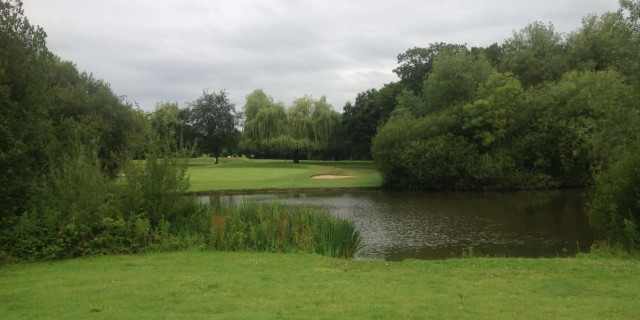
Boasting a history that dates back to the late 19th century, the heritage of West Middlesex Golf Club is evident given that it's part of the Association of James Braid Courses. The legendary five-time Open champion redesigned the layout back in 1910 and it has long enjoyed an enviable location of being just a short journey from Central London.
However, now its future is massively in doubt after Ealing Council agreed to remove the club's long lease and take with it the land back into the hands of the local authority.
The Golf Business has reported: "Under a three-way settlement approved by Ealing Council’s cabinet on July 9, the club will surrender its existing lease which had around 75 years left to run over roughly 130 acres, and be granted a short-term 'excluded lease' allowing it to remain on the site only until September 30, 2027. An excluded lease carries no automatic right of renewal.
"The council will then sell a 2.27-acre plot to a company that acted as debt funder to bring the golf club out of administration in 2022, and is now seeking to recover its investment. Ealing has been in active litigation with the club over alleged lease breaches, and officers advised that continuing legal action carried significant cost, uncertainty and risk."
Employing 27 people, the club has more than 400 members and attracts 8,000 visitor rounds each year, so it's no surprise that there has been outrage about this crisis, with close to 5,000 verified signatures now being added to a petition that seeks to "preserve West Middlesex Golf Club for the community."
Malkins Bank Golf Club
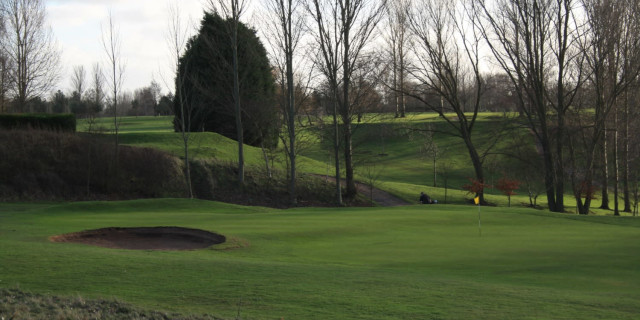
Cheshire's Malkins Bank is a council-owned golf course that is currently facing a most unusual situation. Located on a former industrial landfill site that has been officially designated as contaminated land, staff have been advised to wear "appropriate PPE", including overalls, gloves and goggles, while golfers playing the course are recommend to not retrieve balls from water.
This might sound bizarre, but as the BBC reports, long-term flooding and heavy rain over several years has brought a red-coloured liquid with a "horrendous" smell to the surface, leading to concerns that the layout simply isn't safe to play.
Before being transformed into a public golf course in the 1970s, the land was once home to a chemical factory and salt works, while it later became an industrial waste site during the 1950s.
Local residents have long raised doubts about the safety of the course and previous Environment Agency water sampling found 19 "contaminants of concern" at the site.
Despite that, a council spokesperson said to the BBC that "specialist investigations" had concluded that the land remained "suitable for its current use as a golf course, with assessments consistently finding low risk to human health."
However, despite those assurances, it's fair to say that not everyone is convinced.
The Glen Golf Club
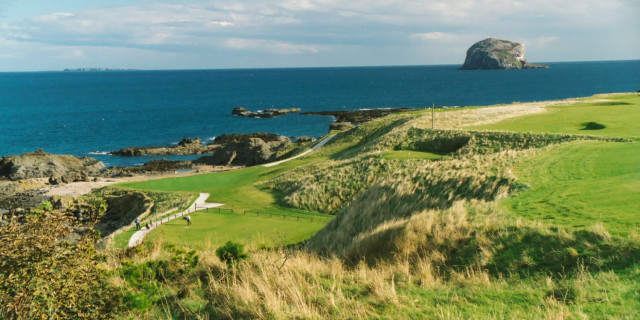
Part of Scotland's Golf Coast in East Lothian, The Glen Golf Club might be overshadowed by the famous West Links in North Berwick, but it nonetheless is an essential component of the golfing culture that makes this one of the great towns in the game.
And members are troubled by plans that could transform their relationship with this beloved course.
The Ancient Links Golf Company (TALGC), which has taken over Scotscraig Golf Club in Fife and Forfar Golf Club in Angus, is seeking to do the same at The Glen, bringing with it millions in potential investment and grand plans to grow the visitor base of the venue.
You might think that such a move would be welcomed, but despite assurances that their playing rights would be protected, a group called Save The Glen has been created due to worries that the sense of community could be taken away, with the group demanding that members receive more information about the finances of the club before a deal is ultimately approved.
The East Lothian Courier has reported that "a vote on whether to accept the proposed deal was planned for September but it is understood that this will be delayed."
The South Buckinghamshire Golf Course
Due to concerns about plans that are set to impact South Buckinghamshire Golf Course in Slough, a petition has drawn a significant number of signatures as clarity is sought regarding proposals that the opposition group believes are "materially different" to what was previously described by the council in 2024.
The Bucks Herald has reported that opponents believe that: "The original public notice referred to leasing the golf course and playing fields for continued use for sport and recreation. However, the (Stoke Pages) task force claims residents were not told that the lease could allow a predominantly private professional football training complex featuring an indoor dome, several training pitches and fencing."
Specifically, this relates to Wycombe Wanderers Football Club, who had drawn up plans that would see a part of the golf course converted into a new training base.
Buckinghamshire Council has rejected calls to restart the tender process and to welcome fresh public representation on the matter.
Wareham Golf Club
Finally, in a somewhat amusing development, Wareham Golf Club in Dorset has significantly shortened its closing hole after complaints from residents who had to deal with stray balls landing in their gardens.
Not dissimilar to this story from 2024 at Thorney Park, the 350-yard, par-four 18th ran alongside a collection of houses that had been built during the 1970s, but a 20-yard buffer zone that once separated the course from the properties was taken over by homeowners, bringing wayward shots even closer to greenhouses and manicured lawns.
Consequently, the club has decided to reduce the final hole to a 137-yard par-three.
Speaking to the Bournemouth Echo, club chairman Jeremy Stokes said: "The game of golf has changed significantly in recent times, with golfers being stronger, equipment and balls creating greater distance, and with this comes the need for the next phase of the golf course design.
"As you get older you certainly feel the younger players are hitting it further than we did at their age.
"Our boundary with the Northmoor Estate changed when land used to access the pylons was sold to neighbouring property owners, creating a shared boundary.
"Over the past five years, we have become aware that more balls were leaving the course, raising concerns about our neighbours' safety and our members' liability.
"These two factors led us to remodel the hole, creating a shorter layout with less room for balls to leave the course.
"But I think the neighbours raised the issue in the right spirit and we don't want anyone to get injured or things to get out of hand.
"We don't feel aggrieved about it and it has provided us with an opportunity to use some of the land at the back of the course to extend holes into longer par 5s."
There you go, in this case it was a crisis averted, showing that sometimes there is a solution that satisfies everyone.
But these tales - highly contrasting in nature - paint a vivid picture of the plentiful (and sometimes unexpected) barriers that can be thrown before golf clubs nationwide as they seek to operate successfully long into the future.
 X / Twitter