The flights are booked, the resort is chosen and the WhatsApp group is buzzing. Your winter golf holiday is happening.
Now comes the important bit: getting yourself, your clubs and your kit ready so nothing derails the fun. This guide is designed to help you plan the final tasks for your trip and make sure you cover:
- Packing clothing for winter sun
- Deciding whether to take clubs or hire
- Preparing your golf travel bag
- Smart ways to track your luggage
- What to do when you arrive
- Looking after yourself (and your gear) during the trip

Sort Your Golf Clubs (10-14 days to go)
Decide (finally) if you’re taking your clubs or hiring
Even quite close to departure, many airlines still allow you to add a golf bag or sports equipment to your booking, usually for a fee. That means you might still be weighing up whether to travel with your own clubs or hire a set when you arrive.
Most golfers will look to take their own clubs, particularly if they are playing several rounds, care about what they score or simply feel more confident with their own equipment. For those who prefer less hassle at check-in, are on a short trip, a family or city break, or don’t really care too much about the clubs they use, hiring could be the way to go. For a deeper look at this decision, see our feature on travelling abroad with your golf clubs or not.
If you do decide to hire, you can read our full guide on whether you should travel abroad with your golf clubs or not for more detail on the pros and cons, we would recommend you contact the pro shop to reserve in advance, especially if you have any specific requirements. Services such as Clubstohire allow you to book up to 12 months ahead and their website will allow you to check availability based on your travel dates and destination. With prices from around £50 per week for a set of clubs, this could be a viable option for some golfers compared with the additional airline cost for taking your own.
Give your gear a quick health check
If you aren’t playing as much golf as you normally would in the summer, your next outing could be this trip. If so, it’s worth checking your golf clubs and essentials:
- Are the grips still in good condition?
- Are your clubs clean and ready for a golf vacation in the sun?
- Do you need to put a new, fresh golf glove in your bag?
- Do you have enough golf balls for the week?
A quick once-over now avoids last-minute panic when you’re packing.
Check your insurance is up to date
Before you go, make sure your covered if anything doesn't go to plan.
- Did you remember to sort your travel insurance and does it cover golf as an activity?
- Do you have golf insurance that includes overseas travel, covering the value of your clubs, rangefinder and other accessories?
A quick review now means less stress if your luggage is delayed or anything is damaged in transit.
Do you need airport parking or a hotel
If you’re driving to the airport, it’s worth booking airport parking in advance to save both time and money. Providers such as Holiday Extras also offer overnight airport hotel and parking packages, which can be a big help if you’ve got a really early flight.
Plan Your Clothing & Accessories (4-7 days to go)
Think of this stage as “packing with a plan”, not just throwing polos into a case.
Pack for warm days but cool mornings.
Winter sun can still mean chilly early starts and breezy afternoons. Plan for:
- Breathable golf shirts
- Shorts and a pair of lightweight trousers
- Thin base layers for cooler mornings
- A light, packable waterproof - showers and wind do still happen
This way you’re prepared whether it’s cool on the first tee or hot by the back nine.
Don’t forget the small golf essentials
These are the things that are annoying and expensive to buy in the pro shop:
- Spare gloves (including a wet-weather pair if you’re going somewhere humid).
- Enough balls - and a few practice balls if the range uses mats.
- Tees, pitchmark repairer, ball markers.
- Suncream & lip balm.
- Bug spray or insect repellent - and use it, especially around early mornings and sundown
- A cap or visor, and maybe a light beanie for early tee times.
- Sunglasses suitable for golf (polarised lenses can really help).
Create a “golf day bag”
Set aside a small backpack or shoe bag that will be your everyday on-course bag so you’re not hunting for things in the hotel room with a 7:50am tee time looming. Include:
- Rangefinder/GPS
- Tees, balls, glove
- Sunscreen, sunglasses
- Phone charger / power bank
Pack it now and you’ll be able to grab it and go each morning.
Pack The Golf Clubs Properly (1-2 days to go)
This is where you can avoid the classic horror story of snapped shafts and bent drivers. For more detailed advice on flying with your clubs, including airline tips and extra protection ideas, see our article on 9 tips for travelling abroad with your golf clubs.
Prep the bag before it goes in the travel cover
- Strip out dead weight - old balls, random tools, half the ball markers you’ve collected since 2014.
- Put the heaviest heads (wedges, short irons) at the bottom of the bag.
- If your driver and fairways are adjustable, remove the heads and store them in headcovers in a side pocket; keep the screws safe.
- Use towels, clothing or bubble wrap between club heads to stop them rattling.
Use a travel cover and a shaft protector
- A decent padded travel cover is essential, whether hard case or a sturdy soft case.
- Add a “stiff arm” / club protector or a makeshift pole that extends slightly above your longest club to take any impact.
- Tighten all straps inside and out so nothing moves around.
Label everything
Put ID tags on both the travel cover and the golf bag inside. Include your contact details and where you are staying. Take a quick photo of the packed bag - useful if you ever need to describe it to an airline.
Track Your Golf Bag - Smart Tech
Bags do go missing, especially in winter when bad weather can cause missed connections. On a recent return from Phoenix, Golfshake’s Travel Editor’s clubs didn’t appear on the carousel at Manchester - but a tracker in the travel cover showed they’d actually made it to Heathrow and simply missed the onward flight. Annoying, but not a mystery.
Scout Travel Smart Luggage Tag by Knog
If you like the idea of tracking your clubs but want something tougher and more feature-packed than a bare AirTag, the Scout Travel smart luggage tag by Knog is a neat option.
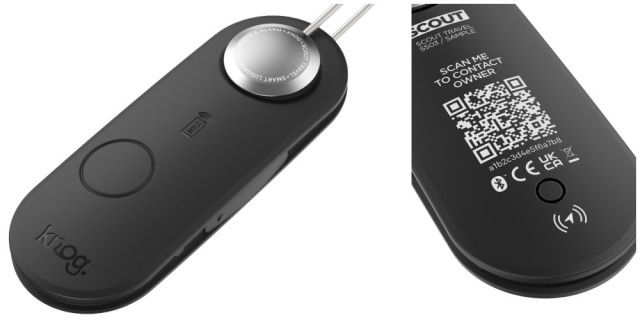
In simple terms, it’s a robust smart luggage tag that:
- Works with Apple’s Find My network, so you can see the bag’s last known location in the Find My app, just like an AirTag.
- Is USB-C rechargeable, with a battery that can last weeks between charges, so you’re not constantly swapping coin cells.
- Has a built-in, motion-sensitive 85 dB alarm you can arm via an app – useful if someone wheels away the wrong travel cover or you’re sitting in a busy terminal.
- Uses a stainless-steel security cable and tamper-resistant fixing, so it’s far more secure than a flimsy plastic tag.
- Includes a QR code / digital ID, letting someone scan the tag to see your chosen contact details if you’re separated from your bag.
The main limitation is that it’s designed for Apple users only - you’ll need an iPhone, iPad or Apple Watch, as it doesn’t support Android at this stage. For Android check out the Tile by Life360 Mate.
You can attach it to your golf travel bag, suitcase, or both. It isn’t the only tracker on the market, but it does combine tracking, alarm and ID in a very travel-friendly package.
Final Checks - The Day Before Travel
Charge everything
- Phone, watch, GPS/rangefinder.
- Any smart tags or trackers (including something like the Scout Travel).
- Power bank.
Don’t forget a power adaptor
Pack the right travel power adaptor for your destination so you can actually use all those fully charged devices when you arrive.
Pack a mini “golf emergency kit” in hand luggage
Just in case the worst happens and your clubs take the scenic route:
- One glove.
- A few balls and tees (check security rules where you’re flying from).
- Golf shoes (if allowed as part of your cabin bag).
- Printout or screenshot of your insurance policy and contact details.
This way, even if your main bag is delayed, you’ve got enough to hire a set and still play.
Day Of Travel: At The Airport & In Transit
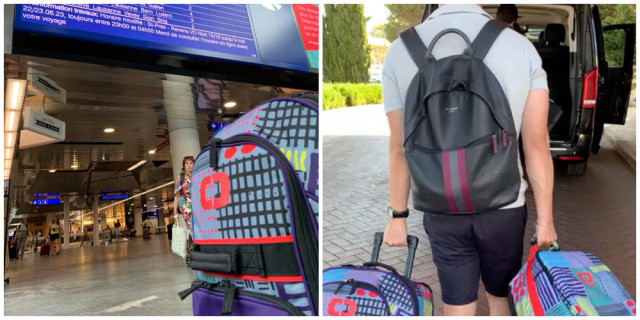
At check-in and bag drop
- Get to the airport in good time - oversize and sports baggage counters can be slower.
- Watch that the golf bag is tagged to the correct final destination, especially if you’re connecting.
- Keep your baggage receipts somewhere safe.
- When you hand it over at oversize luggage, make sure it goes properly onto the belt or into the hands of a staff member.
In the terminal and on the plane
- Use your phone to double-check the last known tracker location after check-in - it should show the airport.
- Stay hydrated, particularly if you’ve got an early tee time the next day.
- Be realistic with how much you eat and drink if you’re straight onto the course after landing - nobody’s best round starts with jet lag and three pints of lager.
On Arrival: First 24 Hours
At baggage reclaim
- Head straight to the oversize luggage / special baggage area for your clubs.
- Check the bag and clubs for obvious damage before leaving the airport.
- If your clubs aren’t there:
- Check your tracker app for their last location.
- Report it immediately to the airline’s lost baggage desk.
- Get a Property Irregularity Report (PIR) and reference number.
- Ask about compensation or hire club costs if they’re delayed by more than a certain time (your insurance may also help here).
Check in, then check out your golf
Once you’re at the hotel or resort:
- Confirm tee times and transfers for the next day.
- If you’re using hire clubs, go and see the set as early as possible:
- Check shaft flex.
- Make sure you’ve got the right handedness and enough wedges.
- If your own clubs made it:
- Give them a quick once-over.
- Reattach any adjustable heads you removed.
A gentle range session or a few putts helps flush the travel stiffness out before your first proper round.
During The Trip: Looking After Clubs, Body & Scorecard
Daily care for your clubs
- Dry grips and heads if there’s any moisture or humidity.
- Keep the travel bag and luggage tags on the same key hook or wardrobe space so you’re not scrambling on the final morning.
- If you’re leaving clubs in a car boot, hotel store room or clubhouse:
- Use any locks provided.
- Consider arming any smart tag alarm while you’re away from them.
Look after yourself too
Warm weather plus extra golf can catch you out:
- Stretch before and after the round - hips, back and shoulders in particular.
- Drink water progressively, not just a pint at the turn.
- Use sunscreen even when it’s hazy - winter sun can still burn.
- Don’t forget a rest day or lighter day if you’re playing a lot of golf back-to-back.
- Consider electrolyte tablets or sachets to add to your water on the course, especially if it’s hot and you’re walking
Your swing will thank you on the final day.
Journey Home: Don’t Switch Off Too Early
It’s easy to mentally clock off at the end of a great trip, but your clubs still have one more journey to survive.
Pack with the same care on the way back
- Re-pack your clubs in the travel cover just as carefully as on the way out.
- • Confirm your tag, tracker and ID are still attached securely.
- Check in good time and keep baggage receipts.
If your clubs do miss a connection on the way home, at least you’ll be able to see where they are and chase them up calmly rather than guessing.
Final Thoughts
Your winter golf holiday should be a highlight of the year, not a source of stress. Once the flights and resort are booked, a bit of organised preparation in the final couple of weeks will hopefully make packing easier, help protect your clubs and minimise the chances of any nasty surprises at the airport.
 X / Twitter
 Instagram