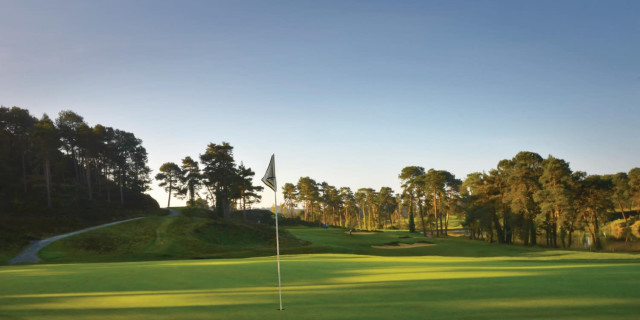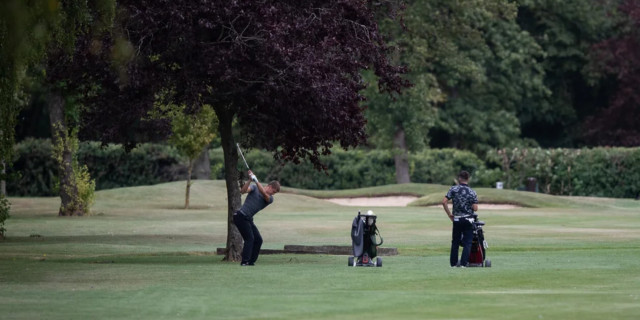
Every golfer has played two courses of similar length that feel completely different in difficulty.
One might have wide fairways, large greens and few hazards, while another features narrow tree-lined holes, deep bunkers and fast, sloping greens.
So how is that difficulty measured?
Under the World Handicap System (WHS), every rated golf course is given a Course Rating and a Slope Rating, allowing golfers to compete fairly no matter where they play.
Here's how golf courses are assessed and why those numbers matter.
What is a Course Rating?
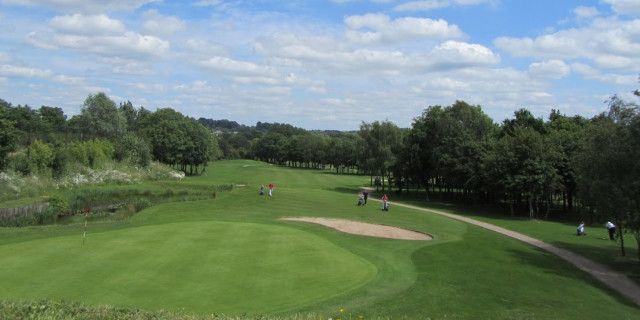
Course Rating represents the score that a scratch golfer is expected to shoot under normal playing conditions.
A scratch golfer is defined as someone who can play to a Handicap Index of 0.0.
For example:
- Course Rating 72.8
- Par 72
A scratch golfer would be expected to score around 73.
Importantly, Course Rating is not always the same as par.
Some courses have:
- Par 72
- Course Rating 70.9
Others may be:
- Par 71
- Course Rating 73.4
That tells you how difficult the course actually plays.
What is Slope Rating?
Slope Rating measures something completely different.
Rather than assessing how difficult the course is for scratch golfers, Slope Rating measures how much harder the course plays for the average golfer compared to a scratch golfer.
Slope Ratings range from:
- 55 (very easy)
- 113 (average difficulty)
- 155 (extremely difficult)
The higher the Slope Rating, the more handicap strokes golfers receive.
This is one of the foundations of the World Handicap System.
Who Rates Golf Courses?
Golf courses are assessed by trained rating teams working on behalf of the national governing bodies.
In Great Britain and Ireland this is carried out under the World Handicap System through the respective national unions.
Courses are re-rated whenever significant changes occur, such as:
- New tees
- Altered green complexes
- Added bunkers
- Major tree removal
- New water hazards
- Significant length changes
How is a Golf Course Rated?
Rating a golf course is far more detailed than simply measuring its length.
Course rating teams assess how both a scratch golfer and a bogey golfer are expected to play every hole.
The overall rating combines two key areas:
Effective Playing Length
Length is much more than the number on the scorecard.
Assessors consider:
- Roll after tee shots
- Elevation changes
- Doglegs
- Forced lay-ups
- Prevailing wind
- Altitude (where applicable)
All of these affect how long a hole actually plays.
Obstacle Factors
Each hole is then assessed for the obstacles likely to affect scoring.
These include:
- Topography
- Fairway width
- Green target size
- Recoverability and rough
- Bunkers
- Penalty areas
- Trees
- Green speed
- Green contours
- Psychological difficulty
Each factor is evaluated separately for both scratch and bogey golfers.
Why Does Slope Rating Matter?
Before WHS, handicaps travelled poorly between courses.
A golfer might play well on an easy course but struggle elsewhere.
Slope Rating helps correct that.
When you arrive at a new course, your Handicap Index is converted into a Course Handicap using:
- Course Rating
- Slope Rating
- Par
This ensures golfers receive the correct number of handicap strokes regardless of where they play.
What Happened to Standard Scratch Score (SSS)?
Many golfers still remember Standard Scratch Score (SSS).
Before the World Handicap System was introduced, SSS represented the score a scratch golfer was expected to achieve and formed the basis of handicap calculations in Great Britain and Ireland.
Today, Course Rating has effectively replaced SSS under WHS.
Although some golfers still refer to SSS out of habit, Course Rating and Slope Rating now provide a much more consistent method for handicapping worldwide.
Why Two Similar Courses Can Feel Completely Different
Imagine two golf courses both measuring 6,700 yards.
Course A:
- Wide fairways
- Few bunkers
- Large greens
- Minimal rough
Course B:
- Narrow tree-lined fairways
- Fast sloping greens
- Water hazards
- Deep bunkers
Although the yardage is identical, Course B would almost certainly receive a higher Course Rating and Slope Rating because it presents a much greater challenge.
Frequently Asked Questions
Is a higher Course Rating harder?
Generally yes. A higher Course Rating indicates a scratch golfer is expected to score higher.
What is an average Slope Rating?
113 is considered average.
Why is my Course Handicap different on different courses?
Because every course has a unique combination of Course Rating and Slope Rating.
Does weather affect Course Rating?
No. Ratings assume normal playing conditions. Temporary weather conditions don't alter the official rating.
Understanding Your Handicap with Golfshake
Understanding Course Rating and Slope Rating is only part of the picture.
Golfshake automatically calculates an Handicap Index, Course Handicap and scoring for rounds played, making it easy to understand how different golf courses affect your game.
Whether you're playing your home course or somewhere new, Golfshake helps you record scores, analyse performance and track your progress wherever you play.