I love the Open. You can make a convincing argument that the Masters is the perfect tournament, ideally made for TV, but this is the greatest championship, the grandest spectacle, the one that just feels that extra bit special.
Part of that is the history, dating back to 1860 and the origins of the modern game, the sense of heritage is unmatchable, but then you have to consider the intricacies of links golf and the timeless challenge that it provides to the world's best golfers. It's quite simply the most compelling form of the game to watch as the vagaries of the conditions and the shots required place a premium on creativity.
It's an event with its own distinctive style and soundtrack. There's the iconic Claret Jug, the striking yellow leaderboard overlooking the 18th green, the dusty fairways when it's dry and the sea of umbrellas when it's wet. Ultimately, this sport offers no other presentation quite like it.
The Open is about art over science. But increasingly it's commerce that has begun to trump everything else.
The Open Ticket Ballot Has Changed Everything
While my affection for the championship remains intact, something fundamental has been lost in recent years since the annual ticket ballot was introduced.
Back in 2019, celebrating the Open's long-awaited return to Northern Ireland, tickets for Royal Portrush quickly sold out due to high demand.
The pandemic meant that there was no championship in 2020 - the first time that had happened since the Second World War - with the 2021 edition at Royal St George's seeing a restricted attendance due to protocols that remained in place.
But 2022 was going to be spectacular. Things were opening up again. International travellers were ready to embrace the opportunity once more. And the Open Championship was making its way back to St Andrews for the milestone 150th playing of golf's original major, fittingly staged at the legendary Old Course.
Sensing the gravity of the moment, and learning from the philosophy adopted by other sporting giants like Wimbledon and the World Cup, the R&A introduced a ticket ballot ahead of the 150th Open.
Commenting at the launch, then chief executive of the R&A, Martin Slumbers, said: "We expect exceptional demand to be part of these celebrations and the ballot will give as many fans as possible the chance to secure a ticket and be part of history being made at one of the world’s most revered and renowned sporting events."
Attendances Have Grown Hugely at The Open
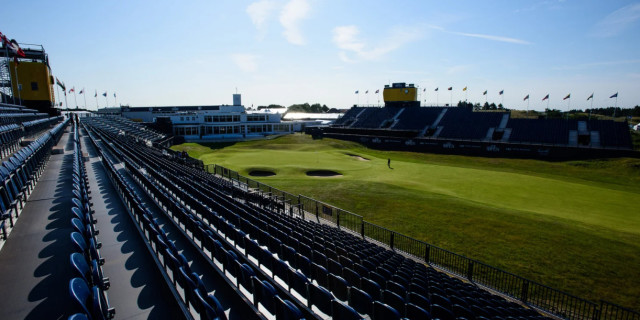
(Image Credit: Kevin Diss Photography)
There were an estimated 1.3 million applications that year that led to a record attendance of 290,000. From an economic standpoint, the ballot was a resounding success and that established a template that has remained in place since.
You just have to see the crowd numbers to understand why. 261,180 were at Royal Liverpool - where conditions had turned fairly miserable over the weekend but fans were compelled to be there - with 258,174 at Royal Troon in 2024.
Last year saw Portrush once again deliver with 278,000 estimated to have attended across week. And now, in 2026, the Open is set to reach even loftier heights as the overall attendance is expected to reach 300,000 at Royal Birkdale, far surpassing the 235,000 (then a record for the championship in England) who made their way to Southport in 2017.
The ballot has artificially generated interest and has brought significant financial benefits to the R&A, who invest widely to nurture the game across the planet. The importance of that work cannot be underestimated.
But something has been discarded, part of the event's soul is now a distant memory.
The Open is Now - Sadly - Just Another Sporting Event
Generations of golf fans throughout these islands and beyond had been accustomed to the Open being accessible to everyone, many had made it an annual tradition to be there each year for decades, buying a season ticket (which was remarkably good value), without the need to survive the uncertainty of a ballot or having to purchase a ticket months in advance.
You could literally turn up on the day, pay at the gate, and consume hours of world class sport. Maybe you lived nearby and a great weather forecast made you consider an impulsive, last-minute afternoon out. Perhaps one of your favourite players had found themselves in contention and you wanted to be there to see it. And you could. There was no other sporting event quite like it.
Growing up in Perth, Scotland, I can remember going on a whim to nearby St Andrews and Carnoustie, where I was able to watch the likes of Tiger Woods, Ernie Els and Colin Montgomerie in their primes, alongside legends of earlier generations like Tom Watson and Nick Faldo who were still competing. It was an inspirational environment for any young golfer.
Commendably, juniors can attend the championship free of charge, but getting into the grounds, especially on tournament days, is a literal lottery these days. Those who made attending the Open each year part of their lives have seen that ambition made harder, streaks have been ended, with the idea of being there for the whole week simply fanciful.
Ticket Prices Have Also Risen Dramatically
Ticket prices have also risen markedly. Adult spectators at Birkdale will have paid a minimum of £130 for tournament days, including £150 for the final round, which is where the even higher costs to attend next year's championship at St Andrews will start from.
Championship day tickets at the Old Course in 2022 were just £95. Some would tenuously argue that - compared to other major events - the Open still presents acceptable value for money, but an increase of close to 60% in five years is clearly extortionate and not something to be considered remotely welcome.
Those who have followed the Open for years will recognise just how much bigger the hospitality pavilions and offerings have become. It's an increasingly corporatised setting that is engineered to maximise income from a different sort of crowd than before.
Perhaps that's just the nature of things now and the Open for too long didn't recognise the economic opportunities out there and neglected to fully commercialise itself in the manner of equivalent events in other sports.
What a shame that it finally realised what was possible.
Should Golf Fans Just Accept The Way of Things?
Maybe the ballot is just a reflection of where things are and that fighting against such initiatives is like trying to push back the tide. Perhaps I'm guilty of naive, nostalgic idealism and need to get with the times, such as they are.
The Open remains a bright and shining highlight on the calendar - I still love it - but I can't escape the feeling that it has lost a piece of itself, part of the magic, that once gone, will sadly never be recovered.
It's why, regrettably, it's now just like any other big sporting event, when it used to be so much more than that.
 X / Twitter