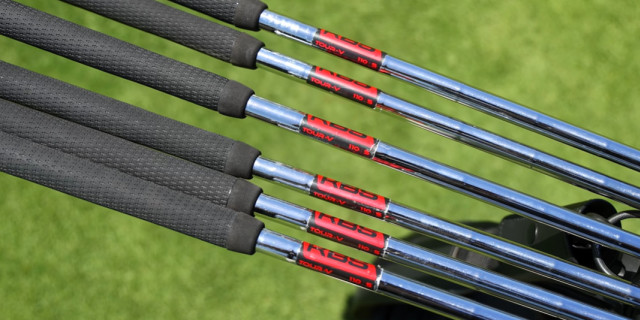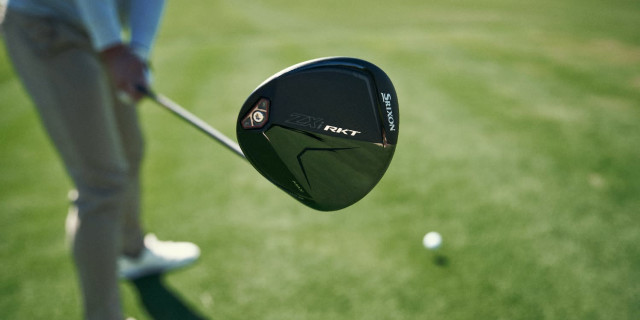
"All the gear and no idea" is a derogatory phrase targeting high handicap players sporting the latest clubs, clothes and technology.
People are often concerned with their image on the golf course, afraid that carrying the latest tech will put them in this bracket or make them look like a 'try-hard'.
Well, golf is indeed a difficult sport and without ‘trying hard’ to find every edge you can possibly gain, your game will stagnate.
Modern golf gadgets are not just flashy toys, technological advancements have made them crucial to improvement, providing more detail and assistance than ever before.
While there is no need to break the bank on every latest gadget on the market, there may be specific pieces of tech that will enhance your game depending on where you most need assistance.
Discover how gadgets can improve your game this year.
Rangefinders And Smart Watches
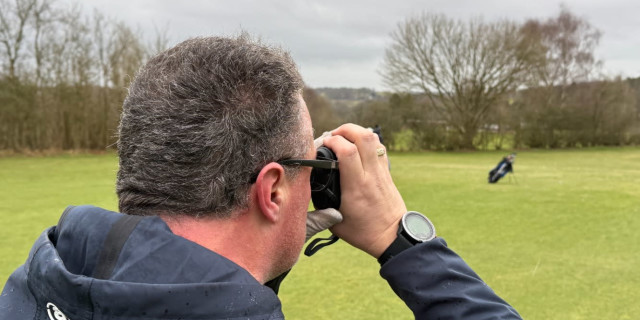
Rangefinders are the most widely used gadgets in golf, with simple technology and a huge on-course payoff.
Depending how premium the rangefinder spec is, they can include slope adjustment, magnification and target modes.
A rangefinder is obviously little use unless you have your club yardages down to a tee, and it is important you log your carry distances on a semi-regular basis, in a simulator or at the range, to get the most from your rangefinder.
Once you have memorised your approximate distances, or have a thoroughly detailed notepad to hand like Matt Fitzpatrick, then you will no longer have to guess when hitting your approach shot. Golf is a game of rhythm, and a rangefinder allows you to make quick decisions to avoid ruining your pace by fretting over club selection.
GPS smart watches have become an increasingly popular alternative to the laser pointing rangefinder. They provide precise yardages for the front, middle and back of the green as well as helping you to avoid hazards, allowing for smarter course management. There is also the added perk of performance tracking, for stats such as shot distances, fairways hit, and greens in regulation, allowing you to observe the strengths and weaknesses in your game.
An obsession over data can over-complicate things and take the shine off the game, so it is important not to over-analyse and use tech for assistance not reliance.
Golf Simulators, Launch Monitors And Shot Trackers
To level up your game it is important to practice with purpose. It is an easy mistake to reach for your driver 50 balls into a range session, and proceed to hammer the rest of your shots with little thought.
Golf simulators provide detailed shot data helping to recognise your weaknesses and target your training, whether that be increasing ball speed, altering your launch angle or creating more spin. Precise shot distance data provides invaluable on course benefits, removing any guess work in your club selection, which is a simple but key component for shooting lower scores.
Launch monitors have become common at practice ranges, providing natural breaks in-between shots to analyse and make adjustments, rather than taking another swing before the previous shot has left orbit.
Simulator technology is not a fad and has come on leaps and bounds over the last few years, transforming from an extravagant showpiece in the mancave of a corporate CEO, to a mainstream advanced training aid accessible at golf clubs, and public simulator centres. They are now also standard practice amongst pros, to the point it is unusual for a top player not to use sims or launch monitor technology.
If you want similar technology to use during rounds or for practice without going to a range or booking a simulator session, then shot trackers are a great option. These are most commonly attached to the butt end of your golf grip using ultra-light sensors that work as shot impact detectors. Your phone or GPS watch records the location at impact and the tracker is able to feedback data between consecutive shots.
Most systems feedback data to an app on your phone giving you a full breakdown of your round and even offering suggestions on what you can work on to improve.
Remote Control Trollies

Now you have probably seen players using remote controlled trollies (such as these from Motocaddy) and thought, ‘what a lazy so and so’, but while they do not directly improve your game, they can have subtle benefits.
Carrying a bag full of clubs and other equipment around 18-holes is physically demanding, and the average golfer does not have a caddie on hand to shoulder the burden. The upside is simple, exhaustion can hinder your speed, power and focus, especially late in a round, and a self-driving trolley eliminates this issue. For older players who struggle to carry a bag this can allow you to enjoy the physical benefits of walking the course instead of using a buggy.
If golf is your go to activity for burning calories, then stick to a carry bag, but in a sport where small tweaks can make a significant difference then why not make the switch.
Golf gadgets are a daunting investment, but if you are committed to improve it is time you embrace them. Rangefinders or GPS watches are near essentials for golfers looking to shoot lower scores. Dropping shots due to poor ball striking is acceptable but being punished for striping the wrong club is soul destroying.
To see a more analytical breakdown of your game, start off by visiting your nearest range with Trackman, or booking a simulator session, and if the data proves useful then maybe invest in a shot tracker.
There is a diverse range of tech available to help you improve, so do not be resistant to change.