Every golfer wants cleaner strikes with their irons.
Whether you're looking to hit the ball further, improve consistency or eliminate frustrating fat and thin shots, the quality of your impact is what ultimately determines the outcome.
In this latest Golfshake tuition video, PGA Professional Aaron Holtom explains why many golfers struggle with their iron play and why improving your strike isn't always about changing your golf swing. Instead, it often starts with changing the way you think about impact.
Why Most Golfers Struggle With Their Iron Strike
According to Aaron, one of the biggest reasons beginner and higher handicap golfers fail to strike their irons consistently is because they have the wrong concept of what good impact actually looks like.
Many golfers believe they should help the ball into the air by trying to lift it, but modern irons are designed to launch the ball for you. Good ball striking comes from delivering the club correctly into impact.
As Aaron explains, a well-struck mid iron should actually launch much lower than many golfers expect, with a launch angle of around 20-21 degrees.
Understanding this changes the way you approach every iron shot.
Three Questions That Will Transform Your Iron Play
Aaron uses a simple three-question quiz to test your understanding of impact.
1. Should You Hit The Ball Cleanly Without Taking Turf?
Many golfers try to avoid taking a divot altogether.
The reality is that quality iron shots almost always involve striking the ball first, followed by the ground.
A shallow divot after impact is a sign that the club has travelled correctly through the ball rather than trying to scoop underneath it.
2. Where Should The Divot Start?
This is one of the biggest misconceptions among amateur golfers.
The lowest point of the golf swing should not be at the golf ball.
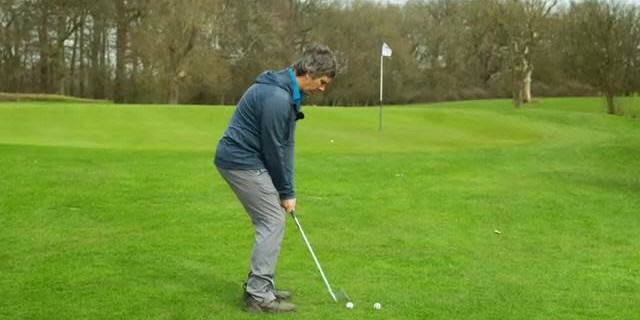
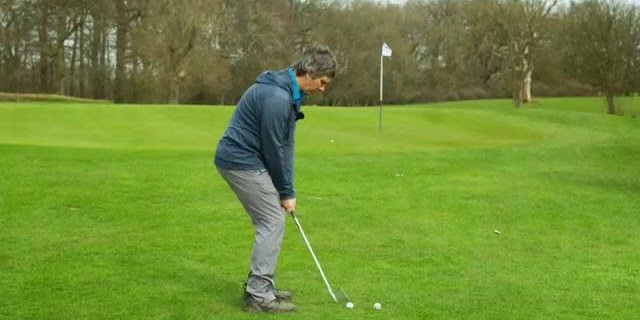
Instead, Aaron explains that the club should continue travelling down after impact, with the lowest point occurring two or three inches beyond the ball.
This allows the clubface to compress the ball before interacting with the turf.
3. What Should The Shaft Look Like At Impact?
Another key ingredient of solid iron play is forward shaft lean.
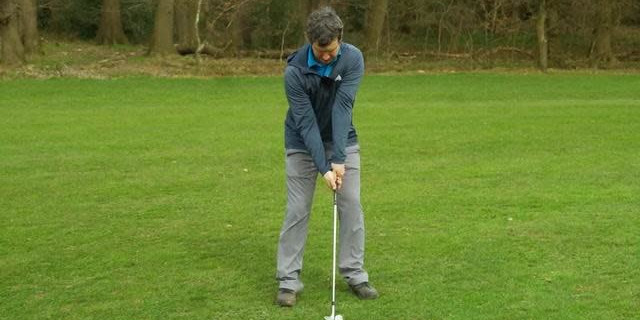
Rather than returning the shaft to a perfectly vertical position—or worse, leaning backwards—better players present the club with the hands slightly ahead of the ball.
This creates a more efficient strike, lower launch and improved distance control.
Common Golf Advice That Can Actually Make Things Worse
Aaron also challenges several pieces of advice that many golfers have heard countless times.
These include:
-
"Keep your head still."
-
"Keep your feet still."
-
"Keep your arms straight."
While these ideas are often well intentioned, they can actually restrict natural movement and make it harder to rotate through the golf ball properly.
Instead of focusing on body positions, Aaron encourages golfers to think about what the club is doing and the outcome they are trying to create.
Focus On The Result, Not Your Body
Research into motor learning suggests golfers often perform better when they focus on external cues rather than internal body movements.
Rather than thinking about individual swing positions, Aaron recommends concentrating on:
-
The flight of the golf ball.
-
Where the club brushes the ground.
-
Creating ball-first, turf-second contact.
-
Producing forward shaft lean through impact.
This shift in focus can help golfers learn more naturally while improving consistency on the course.
Key Takeaways From Aaron Holtom
If you want to become a better iron player this season, remember these simple principles:
-
Strike the ball before the turf.
-
Expect your divot to start after the golf ball.
-
Allow the club to arrive with forward shaft lean.
-
Avoid trying to lift the ball into the air.
-
Focus on the outcome of the shot rather than trying to control every body movement.
-
Use launch data or training aids where possible to monitor your progress.
Watch The Full Lesson
In the video above, Aaron Holtom demonstrates these concepts in more detail and explains how changing your understanding of impact can quickly lead to more consistent strikes, improved distance control and better iron play.
If you've been battling heavy or thin shots, these simple changes in mindset could be the breakthrough your game needs.
About the Author
Aaron Holtom is an Advanced PGA Professional with an MSc in Sports Coaching and has been a full-time teaching professional at Morley Hayes Golf Club for more than 17 years. Working with golfers of all ages and abilities, Aaron combines expert coaching with industry-leading technology, including Trackman, BodiTrak pressure mats and 3D motion capture, to help players improve faster. Alongside individual coaching, he also runs his popular 'Golf Not Golf Swing' group coaching programme, focusing on practical skills, course management and lowering scores.
Find out more at www.golf-not-golf-swing.com.