I look around at my fellow golfers, most of whom are high-handicappers, and wonder why so many of them insist upon using blade-style irons. Or players’ irons as they are more commonly known these days.
Make no mistake - these are more difficult to use. They tend to have smaller heads, and they definitely have smaller sweet spots. Catch the ball perfectly and it will fly beautifully but any off-centre hits will be horrible.
I am considering changing my irons and have reached the age where I will be changing the habit of a lifetime and opting for game improvement irons.
For me, it is a no-brainer. Quite apart from anything else, they are likely to be cheaper. But that is not the primary motivation - I want clubs that are easier to hit.
As usual, I will be getting custom-fitted, but I will be telling the fitter that my goals have changed.
I am no longer in the market for distance (those days have long gone) but I am looking for something that will give me a consistent strike, and that is surely something we should all be striving for.
What Are Game Improvement Irons?
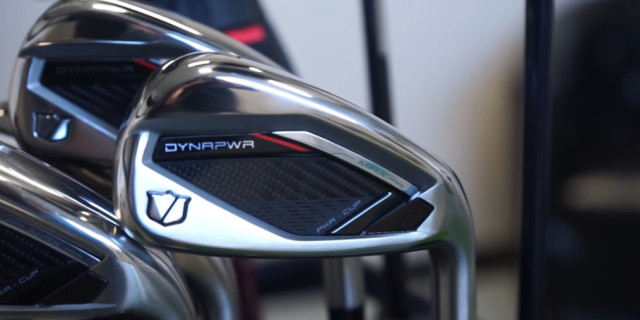
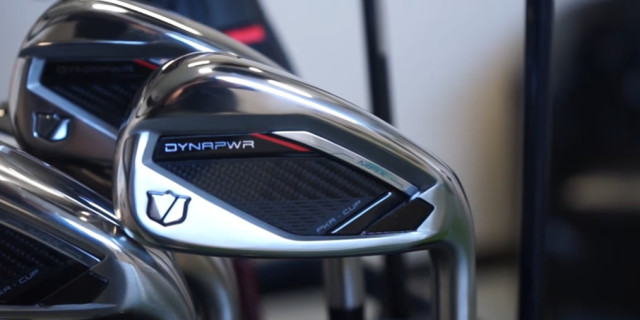
Game improvement irons feature perimeter weighting that enhances forgiveness by spreading the weight around the edges of the clubhead and that helps us to hit straighter shots even when we don’t find the middle of the clubface. Cavity back irons, which have hollowed-out backs, are a common example of perimeter weighted clubs and should be the club of choice for mid- and high-handicap golfers.
Some game improvement irons will be offset. This is where the clubface is set back slightly behind the shaft. Given that most golfers have a tendency to slice the ball, the main purpose of offset is to give us more time to square the clubface at impact. It also helps to move the club’s centre of gravity back, making it easier to launch the ball higher.
Game improvement irons also have stronger lofts. An old eight iron might have a loft of around 38-40 degrees, but in a game improvement iron this will be 31-35 degrees.
The theory is that the stronger loft helps produce more distance, especially for those of us with slower swing speeds or who need help achieving optimal distance with each club. But the clubs are also designed in a way that still allows for a higher ball flight despite the stronger lofts, due to the lower centre of gravity and other forgiveness features such as perimeter weighting.
Game improvement irons will usually feature a low and back centre of gravity to enhance forgiveness and promote a higher launch.
The centre of gravity refers to the point at which the weight of the clubhead is evenly distributed, and this affects how the club behaves during the swing and at impact. In irons, the CG is typically located lower and further back in the clubhead compared to the driver. In a bladed iron, which sits at the other end to a game improvement iron, the centre of gravity is more centred, providing a balanced feel for skilled players who can consistently strike the ball well.
There is, of course, a reason better players blend their irons set-up: they might have more of a bladed iron for the shorter irons and then have more of a game-improvement shape in the longer irons. This is because the longer irons are generally harder to launch and long/mid irons with larger cavity backs or hollow-body designs are more forgiving. For many of us there will be plenty of mishits on the shorter irons too, so it makes absolute sense to give yourself more help throughout the bag.
Custom Fitting is The Only Way
Custom fitting can make a huge difference when choosing irons, regardless of your skill level. Shaft flex, weight, length, and lie angle all influence performance, and even small adjustments can improve consistency and comfort.
If you are not sure which iron type suits you best, a professional fitting can assess your swing and recommend options that align with your game. Most fitters use Trackman to help find the most suitable fit for every player. It captures precise data across more than 40 parameters, from speed and spin rate to launch height and carry distance.
Understanding the difference between game improvement irons and players’ irons removes much of the guesswork from the buying process. By focusing on forgiveness, launch, feel and control, you can choose irons that genuinely enhance your performance on the course.
If you would like to see just some of the leading game improvement irons on the market today, you need to see this feature on the best new irons for high handicap golfers, while the Srixon ZXi5+ is the latest example of an iron of this nature that bridges the gap between various categories by enhancing distance and forgiveness.
Take the time to assess your swing, be honest about your priorities, and don’t be afraid to prioritise consistency over tradition. With the right irons in your hands, better golf often follows naturally.
 X / Twitter
 Instagram