

Major Venue Means Major Renovation
By: Adam Smith | Edited: Mon 14 Jul 2014
Share this article:


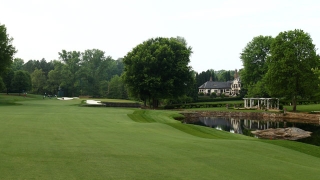 Quail Hollow Club has just been added to the illustrious list of hosting a major by the PGA of America.
The North Carolina venue will host the 2017 USPGA Championship after it received the thumbs ups from governing bodies after recently revived Quail Hollow championships which is a long running sanctioned event on the PGA Tour.
Back in May it was Rory McIlroy who won the latest installment which was renamed in 2003.
But how do courses get added to the Major roster?
Simple, spend thousands if not millions of dollars on renovations, host an event successfully for a few years and hope that the PGA pick you out as a host. But do you go out to be a US Open venue or a USPGA venue? Or both? There have been quite a few courses that have held both championships but is that because they were trusted venues and the PGA didn't have anywhere else to host them?
Now the PGA have an embarrassment of riches to choose from. The amount of quality courses across the United States is on par with the rest of the World.
The difference between a US Open and a USPGA venue is how they are set up. A US Open venue for example is set up in such a way that scoring is very difficult with a premium placed on accurate driving. You often find the scoring to be around par with winner emerging around that score as well if not over par. A US Open course is seldom beaten severely, and there have been many over-par wins, mainly because par is usually set at 70 except for the very long courses.
Normally, an Open course is quite long and will have a high cut of primary rough, hilly greens, and pinched fairways (especially on what are expected to be less difficult holes). Some courses that are attempting to get into the rotation for the US Open will undergo renovations to have these features. Rees Jones is the most notable of the 'Open Doctors' who take on these projects. As with any professional golf tournament, the available space surrounding the course (for spectators, among other considerations) and local infrastructure also factor into deciding which courses will host the event.
USPGA
Since it's inclusion in 1916 the USPGA has also been played on a variety of venues which are usually set-up slightly easier to make scoring a little better but still with that added toughness with the thick rough and the fast greens. The PGA want to make the it a completely different challenge to the US Open which is why in my opinion the USPGA will always rank behind the June showpiece because at the moment it is all too similar.
if you have it played on different courses altogether then you could find the change but as I said earlier there have been many courses that have held both.
I agree that the scoring has been different but I'd like to see a different challenge, like the one we saw at Whistling Straits, which was a man made Links. A challenge like that will set the USPGA apart.

The two majors are the most flexible on the calendar. Of course, The Masters played at Augusta every year and The Open having only nine course on it's roster which is far too less in my opinion but that's a completely different matter altogether.
It will certainly be interesting to know how many courses across the States are going through the renovations just to be added to one of the lists that they all crave.