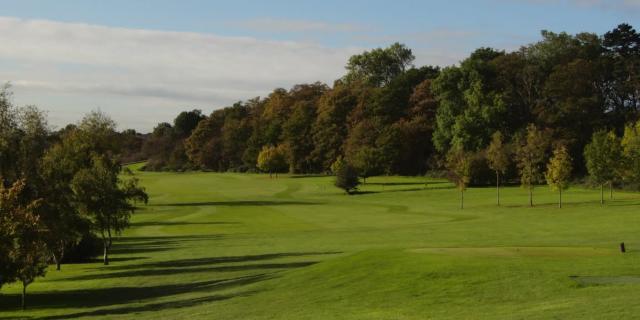
Preparing and maintaining golf courses is both a science and an art. That principle was even understood by early luminaries like Old Tom Morris of St Andrews, but the extraordinary advancements of technology and knowledge have now reached a level that those forefathers of the game couldn't have possibly envisaged.
It's a multi-faceted and complex endeavour to present fairways and greens in the immaculate manner that golfers expect. That challenge is further heightened when you are operating an enduringly popular resort venue where there is constant traffic and footfall. It's taken to even greater heights when you are simultaneously working to deliver a product that is suitable in a significant event hosting some of the finest players on the planet.
That's what staff at The Belfry have recently overcame when staging the Husqvarna British Masters on the DP World Tour.
Further obstacles were created by the searingly hot and dry summer that much of the UK has experienced throughout 2026. But during the tournament week itself, somewhat ironically, it was the arrival of heavy rainfall that dominated the story.
The question of ensuring that venues are sustainable into the future is an existential issue to solve, especially in the face of increasingly extreme weather patterns, but this is where the formidable marriage between the artistic expertise of greenkeeping staff and the remarkable development of automation can make a positive impact.
Angus Macleod - Director of Golf Courses & Estates at The Belfry, has described to us just how useful innovative robotic mowers (supplied by the tournament's title sponsor Husqvarna) were in the weeks and months leading into the showpiece event that once again showcased the iconic Brabazon Course around the world.
He also explains the opportunities that technology of this kind can provide going forward, in addition to addressing the challenges that dramatic climate shifts are creating for greenkeeping teams all over the world.
If you wish to understand more about a modern and dynamic golf course maintenance operation, then you need to read what Angus had to say to us.
How were the Husqvarna robotic mowers deployed in the build-up to the British Masters?
"The preparation started a long way ahead of tournament week. We first trialled the technology at The Belfry last year, which allowed our team to understand how it could fit into our existing course-maintenance operation.
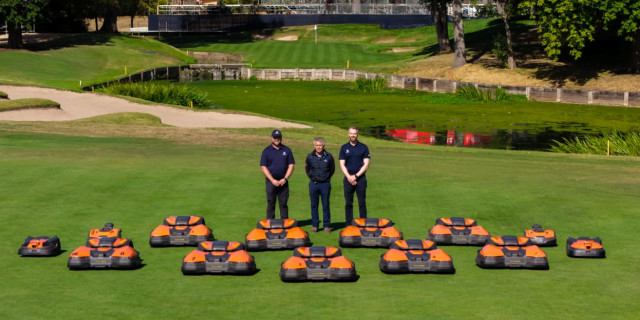
"During the build-up to the British Masters, we had seven Husqvarna CEORA® robotic mowers working across the Brabazon Course. We moved into our tournament cutting programme the week before the event, with the mowers working regularly alongside our greenkeeping team as preparations intensified.
"We were also using robotic technology elsewhere across the site, with CEORA, Automower® 580L and RELOX ball collector deployed on the driving range, while a Husqvarna 535 AWD EPOS was used to maintain the rough around the short-game area. That meant we were able to use the technology across several different areas of the tournament operation rather than simply focusing on the fairways."
What role did the robotic mowers play during tournament week itself?
"During tournament week, the operation increased to 16 CEORA robotic mowers working overnight across the course. This meant that large areas could be cut while the course was closed, ready for our team to begin the detailed course preparation early the following morning.
"They worked alongside our greenkeeping team throughout the event. It was not a case of replacing the work our team does, but using the mowers to support the overall operation and help us manage the considerable demands of preparing a course for a DP World Tour event."
What benefits and advantages did the technology bring to maintaining the course?
"The ability to operate overnight was extremely valuable. Tournament weeks are very busy, with limited windows in which we can work without disrupting players, spectators or the wider event operation. Having significant areas already cut before the team started its morning preparation gave us more flexibility and helped us use the time available effectively.
"Another major benefit became clear when the heavy rain arrived during tournament week. Because the robotic mowers are significantly lighter than traditional fairway mowing machinery, they place less pressure on the ground and were able to continue cutting in wet conditions when taking heavier machinery onto the course would not have been possible. That helped us maintain the mowing programme despite some very challenging conditions.
"That was particularly important because the weather significantly reduced the time we had to prepare the course before play. With the robotic mowers taking care of the fairway cutting, our team could focus on the other essential preparation work. Without them, we simply would not have had enough time to cut the fairways and complete everything else before play began."
In what ways did the mowers change the working demands and tasks for the greenkeeping team?
"They allowed us to redirect members of the team from some of the larger, more repetitive mowing tasks to other areas of course preparation.
"Preparing the Brabazon Course for the British Masters involves an enormous amount of detailed work. By using the robotic mowers for cutting the fairways, our greenkeepers could spend more time monitoring playing surfaces, responding to changing conditions and focusing on the finer presentation and agronomic work required during tournament week.
"The expertise of the greenkeeping team remained absolutely essential. The technology simply gave us another tool to help deploy that expertise where it was most valuable."
Do you believe that introducing technology like this can make greenkeeping work more efficient?
"Yes, based on what we have experienced at The Belfry, I believe it can. One of the things that has surprised me most is the quality of cut the robotic mowers are now capable of delivering.
"When you are preparing a course for a DP World Tour event, there can be no compromise on the quality of the playing surfaces. The feedback we had during the British Masters was extremely positive, with players commenting on the quality of the fairways and saying they would not have known they had been cut using robotic mowers.
"For me, that demonstrates how far the technology has come. If we can achieve the quality of cut we need while also gaining the operational efficiencies that come with autonomous mowing, then there is a clear benefit for the greenkeeping team."
What challenges did this year’s hot and dry summer bring to maintaining the golf courses at The Belfry?
"The prolonged hot and dry conditions placed considerable pressure on the turf and made careful water management particularly important. Our priority throughout was to protect plant health while maintaining the quality and consistency of the playing surfaces across the courses.
"Conditions like those require the team to constantly assess how the turf is responding and adapt the maintenance programme accordingly. It is a balance between maintaining the standards our golfers expect and making sure we are managing the course appropriately through an extended period of heat and limited rainfall. I was extremely proud of how the team managed the conditions and presented the course heading into one of the biggest weeks in our calendar."
How much of a concern is the impact of climate change and more extreme weather patterns going forward?
"More unpredictable and extreme weather conditions are an important consideration for every golf course. This year demonstrated how quickly a greenkeeping team can be required to move from managing prolonged hot and dry conditions to dealing with significant rainfall.
"We have to plan for that unpredictability and consider how we can make our courses and maintenance programmes more resilient. That includes looking carefully at water management, turf health, grass selection, machinery and the way we schedule work.
"Technology can help us respond, but it has to sit alongside strong agronomic knowledge and the experience of the greenkeeping team."
What can golf courses do to ensure their maintenance and greenkeeping practices are sustainable into the future?
"Every golf course is different, but we all need to look at how we can use our resources more efficiently, whether that is water, machinery or the way we manage the turf.
"Robotic mowing is one part of that for us. The mowers are battery-powered, so they have helped us use less conventional fuel-powered machinery, while their lighter weight also means less pressure on the turf.
"It is about finding practical ways to look after the course while still delivering the standards golfers expect. Technology can help us do that, but it needs to work alongside good greenkeeping practices and the knowledge and experience of the team."
As Angus has described, the keen eye of trained, experienced staff will never be surpassed, but technological innovations can play a major part in ensuring that our beloved golf courses shall continue to look at their best for generations to come.
 X / Twitter